Why Nighttime Changes the Equation
Garlic is often treated as a daytime kitchen staple, but timing matters as much as the clove itself. When you crush or chop garlic, the enzyme alliinase converts alliin into allicin — the sulfur compound behind garlic’s antimicrobial punch and cardiovascular support. Overnight, while digestion slows and repair pathways ramp up, that allicin cascade has a quieter window to work without competing with a heavy meal.
Eating garlic at night is less about magic and more about aligning a bioactive food with the body’s recovery rhythm. A small dose before bed can support overnight immune signaling, blood-vessel flexibility, and metabolic calm — if you prepare it correctly and keep the portion modest.
Allicin Activation: Crush, Wait, Then Eat
Whole cloves barely deliver allicin. Crush or mince one to two cloves, then wait about ten minutes before eating. That pause lets alliinase finish its work. Swallowing the prepared garlic with a spoon of raw honey or mixing it into a spoon of olive oil softens the bite and pairs fat-soluble carriers with sulfur compounds.
Heat destroys much of the allicin you just created, so nighttime use favors raw or barely warmed garlic. If raw garlic upsets your stomach, start with half a clove and build up. Never force a protocol that leaves you uncomfortable — consistency beats intensity.
Cardiovascular and Immune Support Overnight
Garlic’s sulfur compounds have been linked to healthier blood pressure responses and more flexible arterial walls. Overnight, when blood pressure naturally dips, supporting nitric-oxide pathways and reducing oxidative stress can complement that recovery window rather than fight a caffeine-heavy morning.
On the immune side, allicin and related organosulfur compounds show broad antimicrobial activity in laboratory settings. A nightly habit will not replace sleep, hygiene, or medical care — but as a food-based signal, it is one of the densest culinary tools available for people who already cook with garlic.
Metabolic Calm and Overnight Digestion
A light garlic serving at night is different from a late heavy meal. Keep it small so digestion stays quiet. Many people find that raw garlic with honey sits better than garlic on a full dinner plate, because the stomach is not already overloaded with protein and fat.
If you tend to reflux, avoid lying down immediately after. Give yourself twenty to thirty minutes upright, sip water, and treat garlic as a deliberate last step — not something swallowed in bed.
A Simple Night Protocol
- Crush one clove and wait ten minutes
- Mix with a teaspoon of raw honey or a splash of olive oil
- Eat about 30–45 minutes before sleep
- Stay upright for 20–30 minutes afterward
- Brush your teeth or chew fresh parsley if breath bothers you
- Skip the protocol after a very spicy or acidic dinner
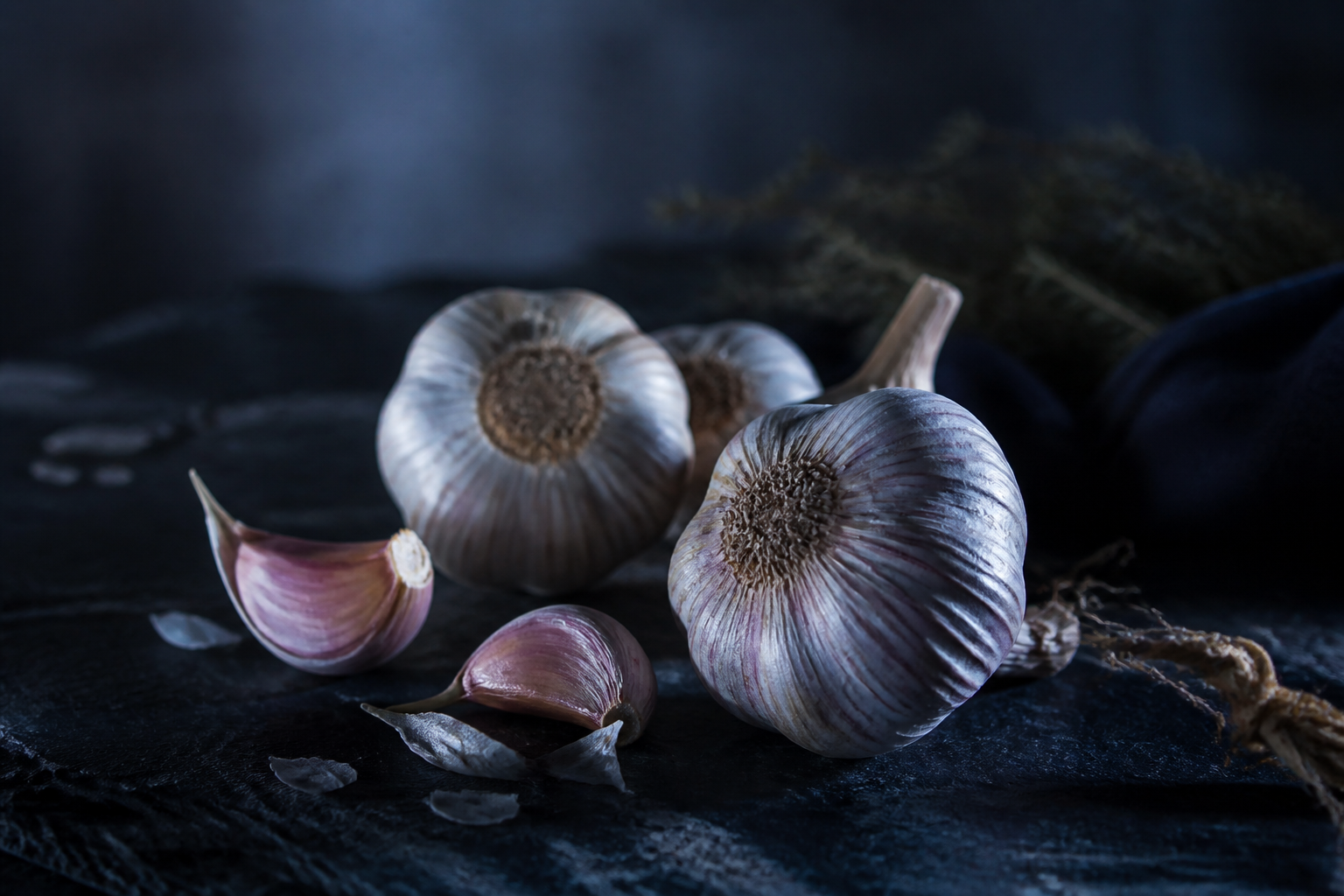
Quality matters: firm bulbs, tight skins, no soft spots. Fresh garlic outperforms tired supermarket cloves that have already begun to sprout or dry out.
Who Should Be Careful
People on blood thinners, those with upcoming surgery, or anyone with a sensitive stomach should talk with a clinician before making raw garlic a nightly habit. Garlic is food, not a prescription — but concentrated bioactive foods still interact with physiology.
Used with intention, nighttime garlic is a quiet superpower: crush, wait, dose small, and let overnight recovery do the rest. The clove is ancient. The timing is the upgrade.
JOIN THE INNER CIRCLE
Tired of flavorless pings? Get the good stuff. We’ll text you secret blueprints, first dibs on Lab seats, and the occasional kitchen hack that actually works. Pure signal, zero spam. Let's cook.