
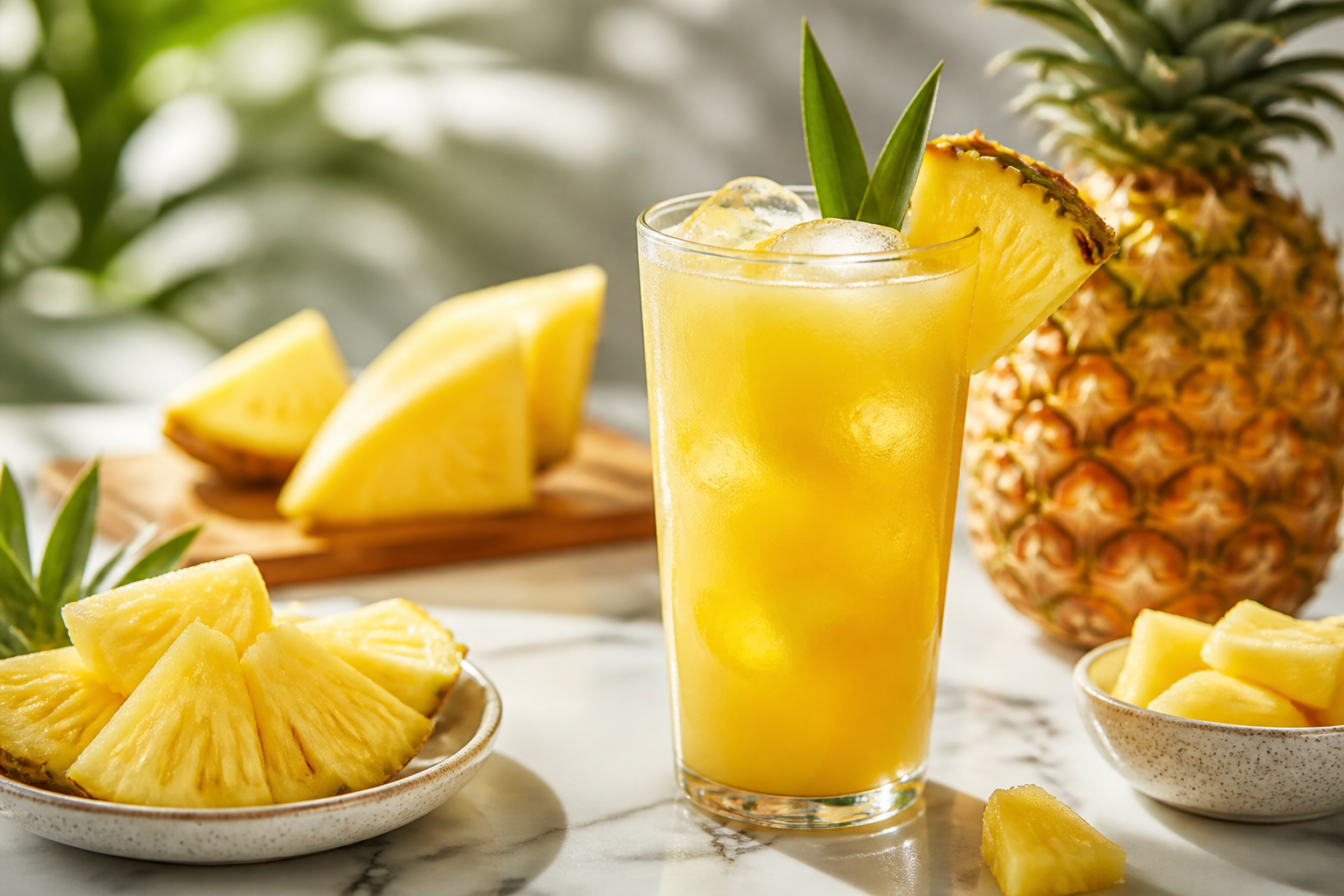
Why Pineapple Juice Earns the Booster Label
Fresh pineapple juice is more than a sweet tropical drink. It carries bromelain — a family of proteolytic enzymes — plus vitamin C, manganese, and a mix of polyphenols that support digestion and recovery. When you juice ripe fruit, you get a fast-absorbing liquid matrix that delivers those compounds without the full chewing load of the whole fruit.
The key is freshness. Pasteurized shelf-stable juice loses much of bromelain’s activity to heat. Cold-pressed or freshly blended juice, drunk soon after preparation, is the version that behaves like a real health booster rather than flavored sugar water.
Bromelain and Digestion
Bromelain helps break down proteins into smaller peptides. That is why pineapple has long been used around heavy meals and why cooks sometimes use it as a marinade tenderizer. In juice form, those enzymes arrive ready to work in the stomach and upper gut — especially helpful after protein-forward meals.
Drink a small glass between meals or twenty to thirty minutes before eating if you want enzyme activity front-loaded. Pairing juice with a huge sugary breakfast cancels most of the benefit — keep the serving modest, about four to six ounces.
Inflammation Support and Recovery
Beyond digestion, bromelain has been studied for its role in modulating inflammatory signaling. Athletes and active people often reach for pineapple after tough sessions because the combination of enzymes, fluid, and natural carbohydrates supports recovery without relying on a powdered supplement.
Vitamin C in pineapple also supports collagen synthesis and antioxidant defenses. Together with manganese for enzyme cofactor roles, the juice becomes a multi-pathway booster rather than a single-nutrient shot.
Immune and Skin Angles
Vitamin C contributes to immune cell function and helps recycle other antioxidants in the body. Regular, reasonable intake from food sources like pineapple juice is a practical way to keep that pathway fed — especially in seasons when fresh produce variety drops.
For skin, the same vitamin C and hydration story applies. Juice will not replace sleep or sunscreen, but it is a cleaner sweet drink than most bottled options when you make it yourself from ripe fruit.
How to Prepare It for Maximum Benefit
- Choose a ripe pineapple that smells sweet at the base
- Peel and blend or cold-press (keep some pulp for fiber)
- Drink immediately or within a few hours refrigerated
- Avoid boiling if bromelain is your goal
- Optional: add a pinch of ginger or a squeeze of lime
- Skip refined sugar
If the juice tastes harsh, your pineapple was underripe — wait for a sweeter fruit next time.
Cautions and Smart Use
Pineapple is acidic and naturally high in sugar. People with reflux, mouth sores, or blood-sugar concerns should keep portions small or choose whole fruit with fiber instead. Those on certain medications should check with a clinician before using concentrated bromelain supplements — food juice is milder, but awareness still matters.
Used well, pineapple juice is a simple ultimate booster: fresh fruit, cold prep, modest glass, clear purpose. That is the Lab approach — density without the gimmick.
JOIN THE INNER CIRCLE
Tired of flavorless pings? Get the good stuff. We’ll text you secret blueprints, first dibs on Lab seats, and the occasional kitchen hack that actually works. Pure signal, zero spam. Let's cook.