Cucurbita Maxima and the Chemistry of Orange
The pumpkin belongs to the Cucurbita genus, a family of fruits that have been cultivated for nutritional density for over 7,500 years. The vibrant orange pigmentation that defines the mature pumpkin's flesh is not decorative. It is the visible signature of one of the most nutritionally significant carotenoid profiles found in any vegetable. Beta-carotene, the primary carotenoid responsible for the orange color, is a provitamin A compound that the human body converts to retinol through a two-step enzymatic process in the intestinal wall.
The conversion efficiency of dietary beta-carotene to retinol is highly variable and depends on the fat content of the meal in which it is consumed, the individual's genetic expression of the BCO1 enzyme responsible for the conversion, and the matrix in which the beta-carotene is delivered. This is where the structural intelligence of pumpkin soup becomes apparent. When pumpkin is cooked and blended into a soup base that includes a fat component — whether from cream, coconut milk, or a drizzle of high-polyphenol olive oil — the fat-soluble beta-carotene is liberated from the cellular matrix and dissolved into the lipid phase of the soup, creating a perfectly optimized delivery vehicle for intestinal absorption.
The Thermal Transformation Protocol
Raw pumpkin is nutritionally inferior to cooked pumpkin. This is a counterintuitive statement in an era that frequently celebrates raw food consumption, but the biochemistry is unambiguous. The cell walls of raw pumpkin contain the carotenoid compounds in a physically bound state within the chloroplasts of the plant cells. Human digestive enzymes cannot efficiently breach these cell walls without thermal assistance.
When pumpkin is roasted at 180°C to 200°C for 35 to 45 minutes prior to soup preparation, three critical transformations occur simultaneously. The Maillard reaction develops the complex flavor compounds that make roasted pumpkin qualitatively superior to boiled pumpkin. The cell walls rupture under thermal pressure, releasing the carotenoid compounds into the intercellular fluid where they become accessible to digestive extraction. And the natural starches in the pumpkin undergo partial gelatinization, creating a thicker, more viscous final product that slows gastric emptying and extends the satiety signal.
Potassium, Blood Pressure, and the Sodium Counterbalance
Pumpkin is one of the richest dietary sources of potassium available in the vegetable kingdom, providing approximately 340 milligrams per 100 grams of cooked flesh. Potassium functions as the primary intracellular cation in human physiology, working in constant opposition to sodium to maintain the electrochemical gradients that govern nerve impulse transmission, muscle contraction, and fluid balance regulation across cell membranes.
The ratio of dietary potassium to sodium is a more meaningful predictor of cardiovascular health outcomes than the absolute intake of either mineral in isolation. A diet low in potassium and high in sodium creates a physiological environment that promotes arterial stiffness and elevated blood pressure by disrupting the sodium-potassium pump's ability to maintain optimal intracellular conditions. Pumpkin soup, prepared with minimal added sodium and consumed as a regular dietary component, contributes meaningfully to improving this ratio and supporting the conditions necessary for arterial elasticity.
Zinc, Immune Architecture, and Cellular Repair
Pumpkin flesh contains meaningful concentrations of zinc, a trace mineral that serves as a catalytic cofactor for over 300 distinct enzymatic reactions in the human body. The immune-supportive role of zinc is well-documented: it is required for the proliferation and activation of T-lymphocytes, the maturation of natural killer cells, and the maintenance of the thymic epithelium that produces naive T-cells. Even marginal zinc deficiency — a state common in populations relying heavily on plant-based diets without zinc-rich supplementation — is associated with measurable impairments in both the innate and adaptive arms of immune function.
Beyond immunity, zinc is an essential structural component of the zinc-finger proteins that regulate gene expression throughout the body, including the genes responsible for cellular repair following oxidative damage. The combination of zinc and the high antioxidant load from pumpkin's carotenoid profile creates a dual protective mechanism: the antioxidants reduce the oxidative damage that necessitates cellular repair, while the zinc ensures that the enzymatic machinery of repair operates at full efficiency.
The Lab Formulation: Precision Soup as Nutritional Architecture
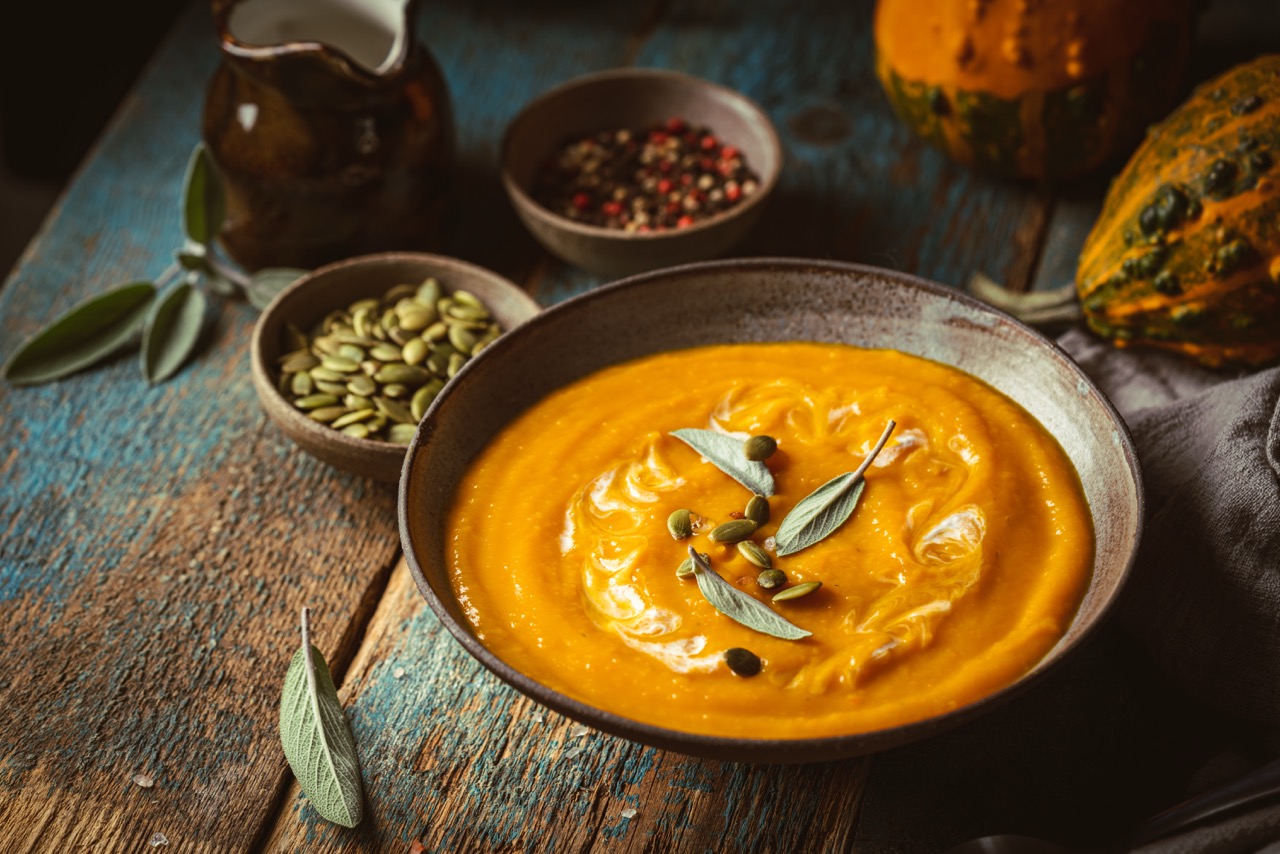
In the Lab, a pumpkin soup is not a comfort food — it is a nutritional delivery system that requires the same precision as any other preparation. The pumpkin is always roasted before blending, never boiled, to capture the Maillard compounds and optimize carotenoid liberation. A fat source is mandatory, not optional, and must be added before blending so that the fat and the carotenoid compounds are homogenized at the molecular level throughout the soup matrix.
The blending process itself matters. High-speed blending at 20,000 RPM creates a particle size reduction that maximizes the surface area of the carotenoid compounds available for intestinal absorption. A final addition of fresh ginger and black pepper introduces gingerol compounds that further stimulate bile acid secretion, and piperine respectively, both of which enhance the bioavailability of fat-soluble nutrients across the intestinal membrane. The bowl of pumpkin soup served at the Lab table is the result of decisions made at every stage of preparation, from the roasting temperature to the final seasoning. Every variable is a lever. Every lever is an opportunity.
JOIN THE INNER CIRCLE
Tired of flavorless pings? Get the good stuff. We’ll text you secret blueprints, first dibs on Lab seats, and the occasional kitchen hack that actually works. Pure signal, zero spam. Let's cook.